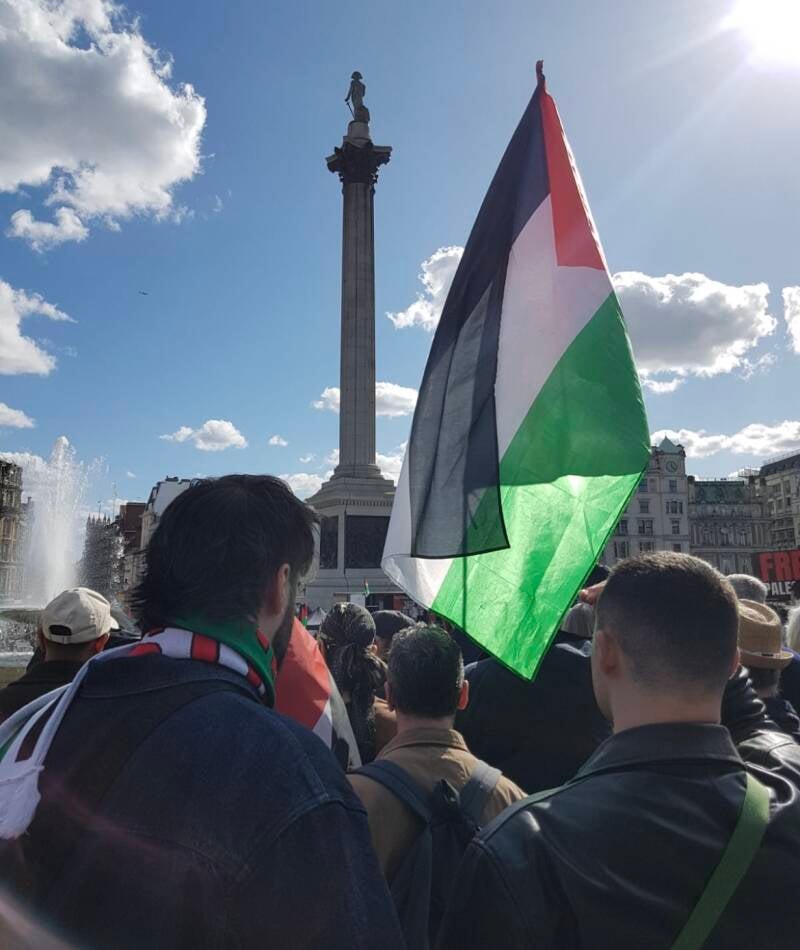
Palestine March image- Guy Meek
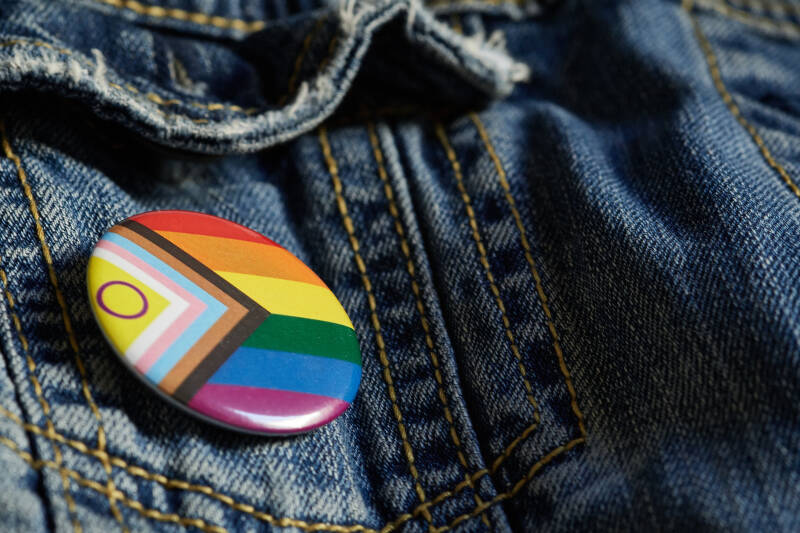
Close-up image of an LGBTQ+ pride badge attached to a blue denim jacket. The pin features the inclusive Progress Pride Flag, representing support, diversity, and the LGBTQ+ community.
By EvaMara
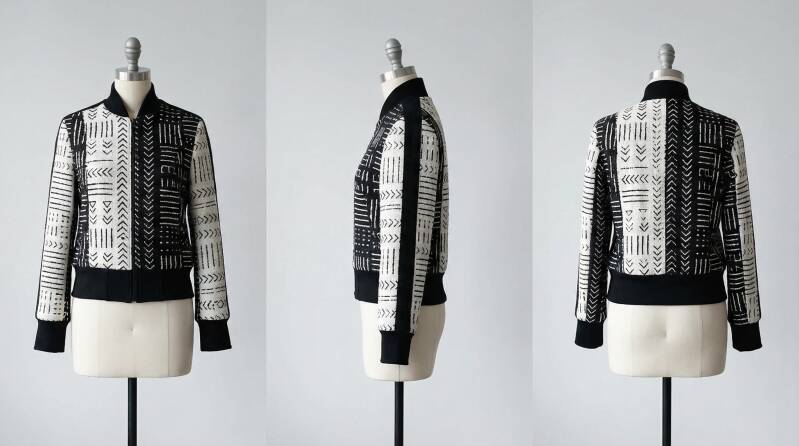
Black‑and‑white patterned jacket with high collar, zip‑front, tribal Aztec motifs, geometric diamonds and triangles, symmetrical design, bold contrast, modern fashion, cultural inspiration, striking
By New
Clothing is often described as self-expression, but for many communities it has also been self-defence, coded language, ceremony, refusal and reclamation. Across centuries and continents, people denied power have turned fabric into Armor and style into strategy.
Fashion in these moments becomes a uniform of resistance. It tells stories that might otherwise be silenced. It creates community in isolation. And it ensures that even in the face of erasure, identity endures.
Queer coding through dress.
For a significant part of modern history, openly showcasing queer identity came with serious risks, sometimes even legal consequences. In response LGBTQ+ communities found clever ways to express their identities through their clothing. This practice became known as “queer coding” which enabled individuals to connect with one another while staying under the radar of the persecution.
Historian George Chauncey notes that in the bustling urban environments of the early 20th century, certain accessories, colours or styles served as discreet markers of belonging. Items like green carnations, leather jackets, or specific hairstyles became symbols that held meaning for those who understood the code.
These coded uniforms were not just about forging connections- they were essential for survival. They created a sense of visibility within invisibility, allowing identities to endure even in the face of danger.
Indigenous Regalia in a Modern Context.
For indigenous communities, clothing has always carried deep cultural, spiritual, and political significance. Today, donning traditional regalia in contemporary settings can serve as a powerful act of resistance against centuries of erasure.
Scholar Leanne Betasamosake Simpson emphasises that reclaiming cultural practices- including clothing- is a way to assert sovereignty and continuity. Whether at protests ceremonies, or even in urban environments, regalia sends a clear message: “We are still here.”
Modern indigenous designers are also merging traditional elements with contemporary fashion, pushing back against stereotypes and reclaiming their narratives. Each bead, textile and silhouette tells a story- transforming garments into living testaments of resilience.
Street Style as Political Language.
Street style has always served as a powerful visual protest. Think about the black panthers rocking their leather jackets and berets, or the bold messages on slogan t-shirts and protest hoodies- everyday clothing becomes a canvas for political expression.
Cultural critic Stuart Hall points out that style is a unique form of communication, especially for marginalized communities that might not have access to traditional power platforms. What we wear can challenge authority, shake up norms, and show solidarity.
In recent movements, clothing continues to carry significant messages- whether it’s through colours linked to specific causes, symbolic pieces, or those viral fashion moments that take over social media. Street style turns our bodies into moving statements that are hard to overlook.
Diaspora Youth Remixing Traditions.
For young people in diasporic communities, fashion often becomes battleground where heritage meets modern identity. Traditional garments get a fresh twist, blending with global trends and finding new contexts to shine.
Sociologist Avtar Brah explains that diaspora isn’t just about being displaced, it’s about creating new cultural expressions. Our clothing reflects this mix-imagine a sari paired with trainers or traditional patterns making their way into streetwear designs.
This remixing goes beyond just looking good; it’s a political act. It pushes back against the pressure to conform while also refusing to stay stagnant. It boldly declares that identity is fluid, ever evolving, and defined by the individual.
Clothing as Archive and Armour.
In all these scenarios, clothing serves as both an archive and a shield. It carries memories of oppression, resistance, and culture, while also providing protection- physically, socially, or symbolically- for those who wear it.
In these moments, fashion becomes a uniform of resistance. It tells stories that might otherwise fade away. It fosters community in times of isolation. And it ensures that even when faced with erasure, identity remains strong.
As these histories illustrate, what we wear is never just a choice. It’s a statement, a declaration, and often a vital act of survival.
Add comment
Comments